Standardised Evaluation of Symptoms and Signs of Exercise-Induced and Infection-Based Immunological Stress Regulation
Table of Contents
- Two Pathways of Immunological Stress
- The Assessment Toolkit — Symptoms, Signs, Laboratory
- Decision Algorithms and Integration
1 Two Pathways of Immunological Stress
Learning objectives:
- Exercise-induced and infection-based stress across the seven framework dimensions
- Symptom vs sign, and the “neck check” heuristic
- The temporal pattern as the decisive discriminator, with PEM as a red flag
1.1 Rationale and Clinical Need
Immune system stress in physically active individuals arises from two partially overlapping but mechanistically distinct sources: exercise-induced immunological stress (acute biphasic responses, overtraining, intensity-dependent suppression, trace element redistribution) and infection-based immunological stress (innate and adaptive immune activation, systemic inflammation, post-infectious sequelae). In clinical and field practice, these two sources frequently co-occur, interact, and may be clinically indistinguishable without systematic evaluation.
A standardised, multi-dimensional assessment framework is therefore required that can:
- Reliably differentiate exercise-induced from infection-driven immunological changes
- Track the temporal dynamics of symptom and sign development
- Identify early warning signals of overtraining, infection risk, or post-infectious complications
- Guide evidence-based decisions on training continuation, medical referral, and return-to-sport clearance (Puta et al. 2026; Schwellnus et al. 2022)
1.2 Conceptual Framework: Two Pathways of Immunological Stress
Exercise-induced versus infection-based stress across key dimensions.
| Dimension | Exercise-Induced Stress | Infection-Based Stress |
|---|---|---|
| Primary trigger | Mechanical load, metabolic demand, catecholamines, cortisol | Pathogen recognition (PRRs/PAMPs), cytokine cascade |
| Onset | Acute, load-dependent, reproducible | Variable, often insidious |
| Temporal profile | Biphasic; resolves within ~24 h (acute) or adapts over weeks (chronic) | Phase-dependent; days to weeks |
| Hallmark immune change | Lymphocytosis → lymphopenia; neutrophilia; ↑ NK cytotoxicity | Fever, neutrophilia, lymphocytopenia, ↑ CRP/IL-6 |
| Key hormones | Adrenaline (SNS), cortisol (HPA) | IL-1, IL-6, TNF, IFN-α/β, cortisol |
| Performance impact | Transient; functional; resolves with recovery | Systemic; potentially organ-specific |
| Resolution | Adequate rest and nutrition | Pathogen clearance, immunological memory |
Exercise-induced versus infection-based stress across key dimensions.
1.3 Symptom Differentiation: Exercise-Induced vs. Infection-Based
The classic “neck check” heuristic remains a practical first-line decision tool:
- Symptoms above the neck (nasal congestion, mild sore throat, sneezing) without systemic features → light exercise may be continued with reduced intensity
- Symptoms below the neck or systemic features (fever ≥ 38.5 °C, myalgia, pronounced malaise, dyspnoea, lymphadenopathy, gastrointestinal symptoms) → training cessation; medical evaluation required (Puta et al. 2026; Nieman and Wentz 2019)
Differentiating exercise-induced from infection-based symptoms.
| Symptom / Sign | Exercise-Induced (likely) | Infection-Based (likely) |
|---|---|---|
| Muscle soreness | Focal, load-specific onset | Diffuse, without load relation |
| Fatigue | Post-exertional, resolves with rest | Persistent; worsened by exertion |
| Elevated resting HR | Mild, training-load dependent | ≥ 7 bpm above individual baseline |
| Fever | Absent | ≥ 37.5–38.5 °C |
| CRP | < 5 mg/L (normal after moderate exercise) | ↑↑ (often > 20 mg/L in ARTI) |
| Lymphocyte count | ↓ post-exercise (transient, normalises < 24 h) | ↓↓ persistent; shift in differential |
| NLR | Transiently elevated post-exercise | Persistently elevated |
| Performance loss | Functional, reversible | Systemic, prolonged |
Differentiating exercise-induced from infection-based symptoms.
The same eight signs, ordered by the distance they put between the two causes — the length of each line is its discriminating power. Fever decides the question without a laboratory, CRP separates almost as sharply but needs a blood sample, and muscle soreness, performance loss and heart rate hardly separate the two at all. Positions are a clinical judgement of typical deviation, not measurements.
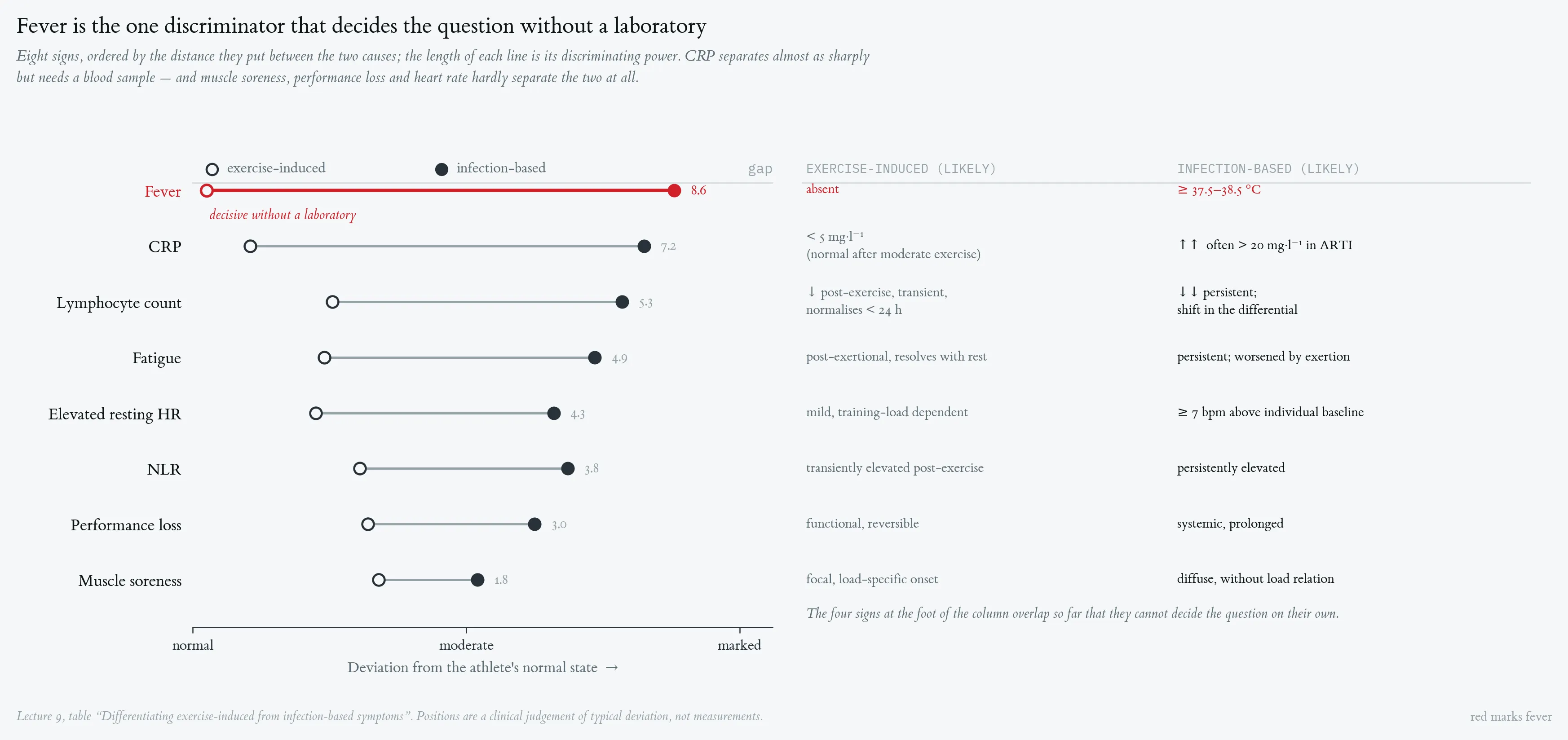
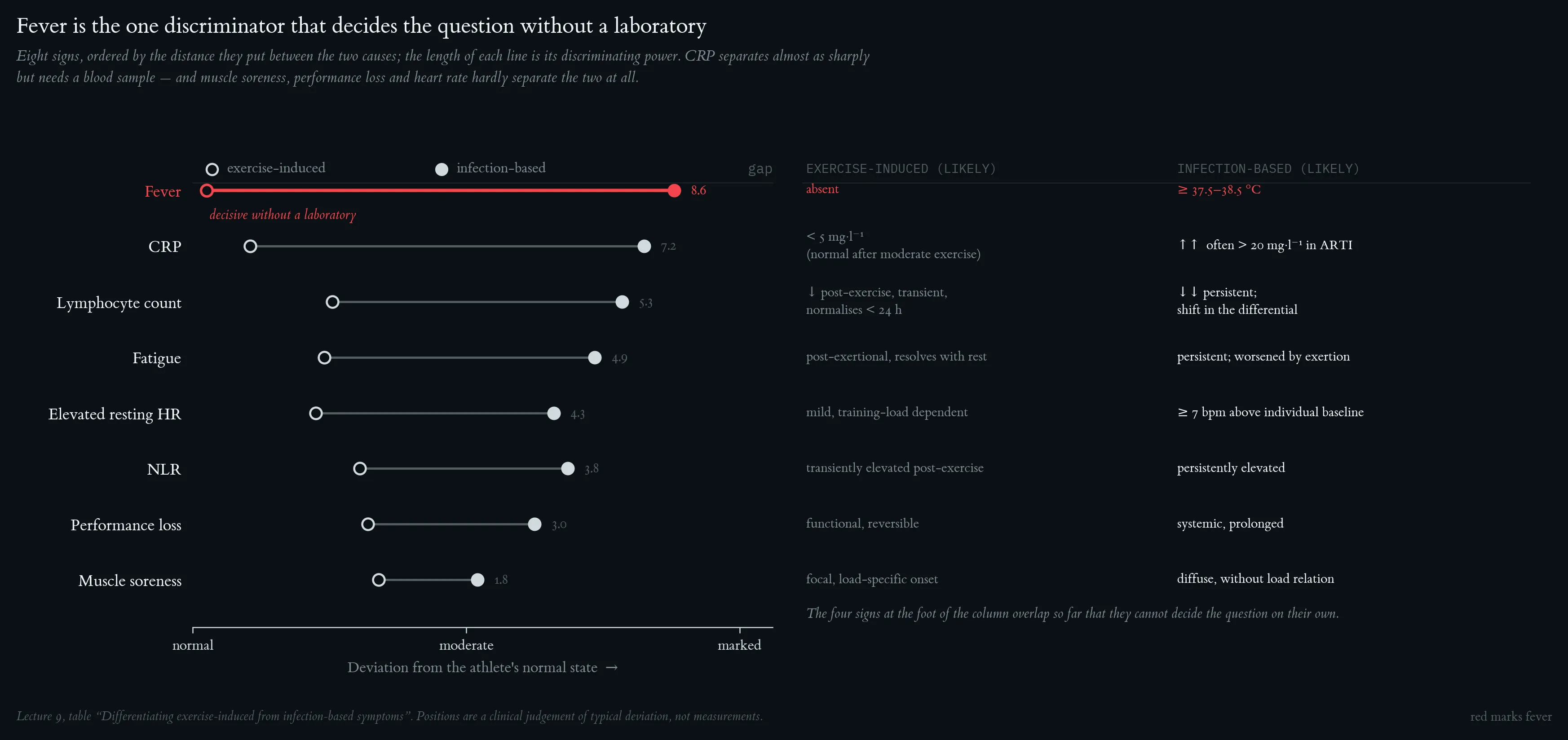
The same eight signs, ordered by the distance they put between the two causes — the length of each line is its discriminating power. Fever decides the question without a laboratory, CRP separates almost as sharply but needs a blood sample, and muscle soreness, performance loss and heart rate hardly separate the two at all. Positions are a clinical judgement of typical deviation, not measurements.
One-Minute-Paper Topics
A One-Minute-Paper (OMP) is a short, focused prompt that students answer in ~60 seconds at the end of a session to consolidate learning, surface misconceptions, and provide formative feedback. When answering, be concise, specific, and use terminology from today’s session.
- Why is standardisation essential when assessing immunological stress in athletes?
- Define the difference between a “symptom” and a “sign” in clinical reasoning.
- Why is the temporal pattern of symptoms (e.g., delayed worsening) clinically meaningful?
- How does post-exertional malaise (PEM) differ from normal post-exercise fatigue?
- Which signs suggest exercise-induced immunological stress rather than ordinary fatigue?
Key References
- Nieman DC, Wentz LM (2019) The compelling link between physical activity and the body’s defense system. J Sport Health Sci 8(3):201-217.
- Puta C, Haunhorst S, Gabriel HHW (2026) Sport und Immunsystem. In: Wonisch M et al. (eds) Kompendium der Sportmedizin. Springer.
- Schwellnus M et al. (2022) IOC consensus statement on acute respiratory illness in athletes. Br J Sports Med.
2 The Assessment Toolkit — Symptoms, Signs, Laboratory
Learning objectives:
- Symptom and load instruments: WURSS, DALDA, TQR, session-RPE, POMS
- The five-domain physical examination and the red flags in each
- The tiered laboratory ladder (Level 1–3) and its escalation logic
2.1 Upper Respiratory Tract Infection Screening
The Wisconsin Upper Respiratory Symptom Survey (WURSS-21) and its abbreviated version (WURSS-11) are validated instruments for the quantitative assessment of cold and respiratory infection symptoms. They capture symptom severity (sneezing, nasal congestion, sore throat, cough, headache, myalgia) on a 0–7 scale and functional impact on daily activities and sport performance. In athletes, the WURSS enables objective symptom monitoring and supports the “neck check” decision rule (Barrett et al. 2002, 2005).
The validated Daily Analysis of Life Demands for Athletes (DALDA) questionnaire assesses sources of stress and symptoms of distress across training load, sleep, nutrition, muscle soreness, and mood — providing a composite index of general stress load that encompasses both exercise and infection-related components.
2.2 Training Load and Recovery Monitoring
The Total Quality of Recovery (TQR) scale and the Rating of Perceived Exertion (RPE) × Session Duration method (session-RPE) provide athlete-reported indices of recovery status and internal training load. When systematically collected, these allow detection of accumulating fatigue that may signal immunological vulnerability.
The Profile of Mood States (POMS) or its brief version identifies the characteristic psychological symptom cluster of overreaching and overtraining (chronic fatigue, depressive mood, concentration disturbances, loss of motivation) — which overlaps substantially with the prodromal phase of acute infections.
2.3 Clinical Signs Relevant to Immunological Stress Evaluation
The physical examination of the athlete with suspected immunological stress should address the following domains:
Vital parameters: Resting heart rate (morning measurement), blood pressure, body temperature, respiratory rate. Persistent resting tachycardia (≥ 7 bpm above individual baseline) is a sensitive early marker of both inadequate recovery and subclinical infection.
Lymphatic system: Palpation of cervical, axillary, and inguinal lymph nodes — tenderness and enlargement indicate active infection rather than exercise stress. Splenomegaly requires exclusion before clearance for contact sports.
Upper airways: Inspection of pharynx and tonsils (erythema, exudate), assessment of nasal congestion and sinus tenderness. Tonsillar exudate in combination with lymphadenopathy and fever is a clinical indicator for streptococcal or EBV infection.
Cardiopulmonary signs: Auscultation for pericardial friction rubs, arrhythmias, or new murmurs; evaluation of dyspnoea at rest or on minimal exertion — critical for exclusion of myocarditis or pulmonary involvement (Halle et al. 2021; Puta et al. 2026).
Neuromuscular assessment: Grip strength, balance tests, and reaction time can be used as objective performance proxies; significant bilateral reductions are indicative of systemic illness rather than localised training fatigue.
2.4 Laboratory Diagnostics: A Tiered Approach
The following tiered approach is proposed for the standardised evaluation of immunological stress, escalating from field-applicable screening to specialised immunology:
Level 1 — Screening (applicable in field and practice settings):
- Differential blood count (WBC, granulocytes, lymphocytes, monocytes, NLR, SII, SIRI)
- C-reactive protein (CRP) and erythrocyte sedimentation rate (ESR)
- Resting heart rate variability (HRV) as an index of autonomic–immune tone
- Urinalysis
Level 2 — Extended diagnostics (indicated by Level 1 abnormalities):
- Trace element panel: serum selenium, SELENOP, total zinc, free zinc (fZn), copper, iron, ferritin, transferrin saturation — adjusted for haemoconcentration where exercise has occurred within the preceding 2 h (Simon et al. 2026)
- Pathogen-specific serology and PCR where clinically indicated
- CK, transaminases (AST, ALT), creatinine, LDH — to differentiate muscular from hepatic and renal involvement
- Thyroid function (TSH) when chronic fatigue is the predominant complaint
Level 3 — Specialised immunological diagnostics (in cases of persistent symptoms or severe/recurrent infections):
- NK cell counts and cytotoxic function (CD56⁺, CD16⁺ subpopulations)
- T cell subpopulations (CD4⁺/CD8⁺ ratio, memory and senescent subsets)
- Complement factors (C3, C4)
- Salivary IgA as a mucosal immunity index (validated marker of upper respiratory infection susceptibility in athletes)
- In vitro functional tests: oxidative burst, lymphocyte proliferation assay
One-Minute-Paper Topics
A One-Minute-Paper (OMP) is a short, focused prompt that students answer in ~60 seconds at the end of a session to consolidate learning, surface misconceptions, and provide formative feedback. When answering, be concise, specific, and use terminology from today’s session.
- Name one validated questionnaire for monitoring training stress and explain its core dimensions.
- How does a symptom score complement biomarker data in decision-making?
- Name two practical field tools for assessing autonomic recovery.
- How can wearable HR/HRV data complement standardised symptom scales?
- What are the limitations of self-report instruments, and how can they be mitigated?
Key References
- Barrett B, Locken K, Maberry R, Schwamman J, Brown R et al. (2002) The Wisconsin upper respiratory symptom survey (WURSS): a new research instrument for assessing the common cold. J Fam Pract 51:265.
- Barrett B, Brown R, Mundt M, Safdar N, Dye L et al. (2005) The Wisconsin upper respiratory symptom survey is responsive, reliable, and valid. J Clin Epidemiol 58:609-617.
- Halle M et al. (2021) Exercise and sports after COVID-19. Transl Sports Med 4:310-318.
- Puta C, Haunhorst S, Gabriel HHW (2026) Sport und Immunsystem. In: Wonisch M et al. (eds) Kompendium der Sportmedizin. Springer.
- Simon R et al. (2026) Acute effects of physical exercise on biomarkers of the trace elements selenium, zinc, copper, and iron. J Trace Elem Med Biol 94:127828.
3 Decision Algorithms and Integration
Learning objectives:
- Algorithm A (acute symptom onset) and Algorithm B (return-to-sport clearance)
- Three principles for reading trace elements in the post-exercise setting
- The standardised evaluation checklist and the actions its thresholds trigger
3.1 Algorithm A: Acute Symptom Onset in Athletes
Every acute presentation runs through the same two gates. Fever or any symptom below the neck ends the session; only symptoms above the neck, without systemic signs, permit reduced training under observation, and even then a 48-hour review has to confirm it. Outlined boxes are decisions, filled boxes actions.
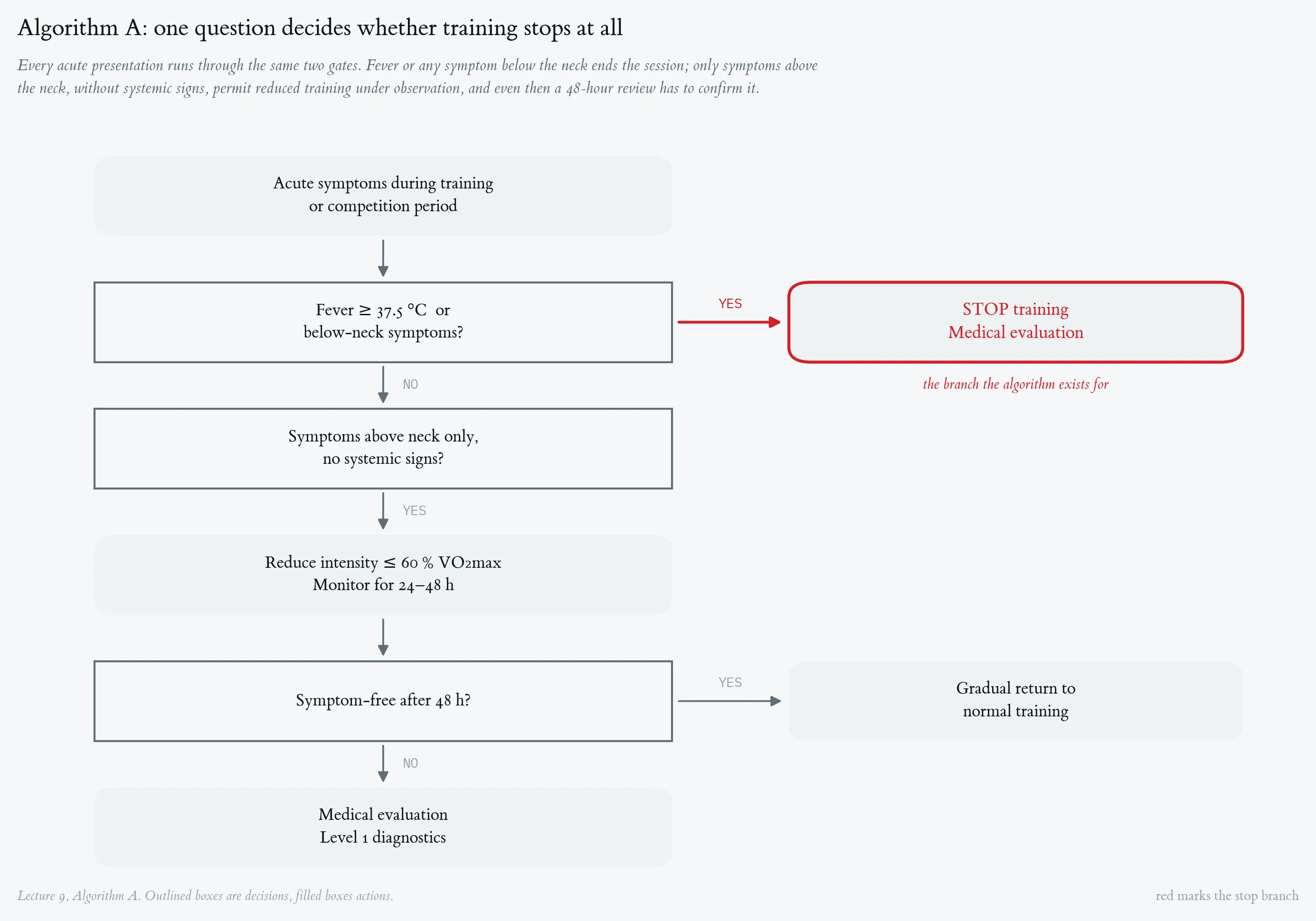
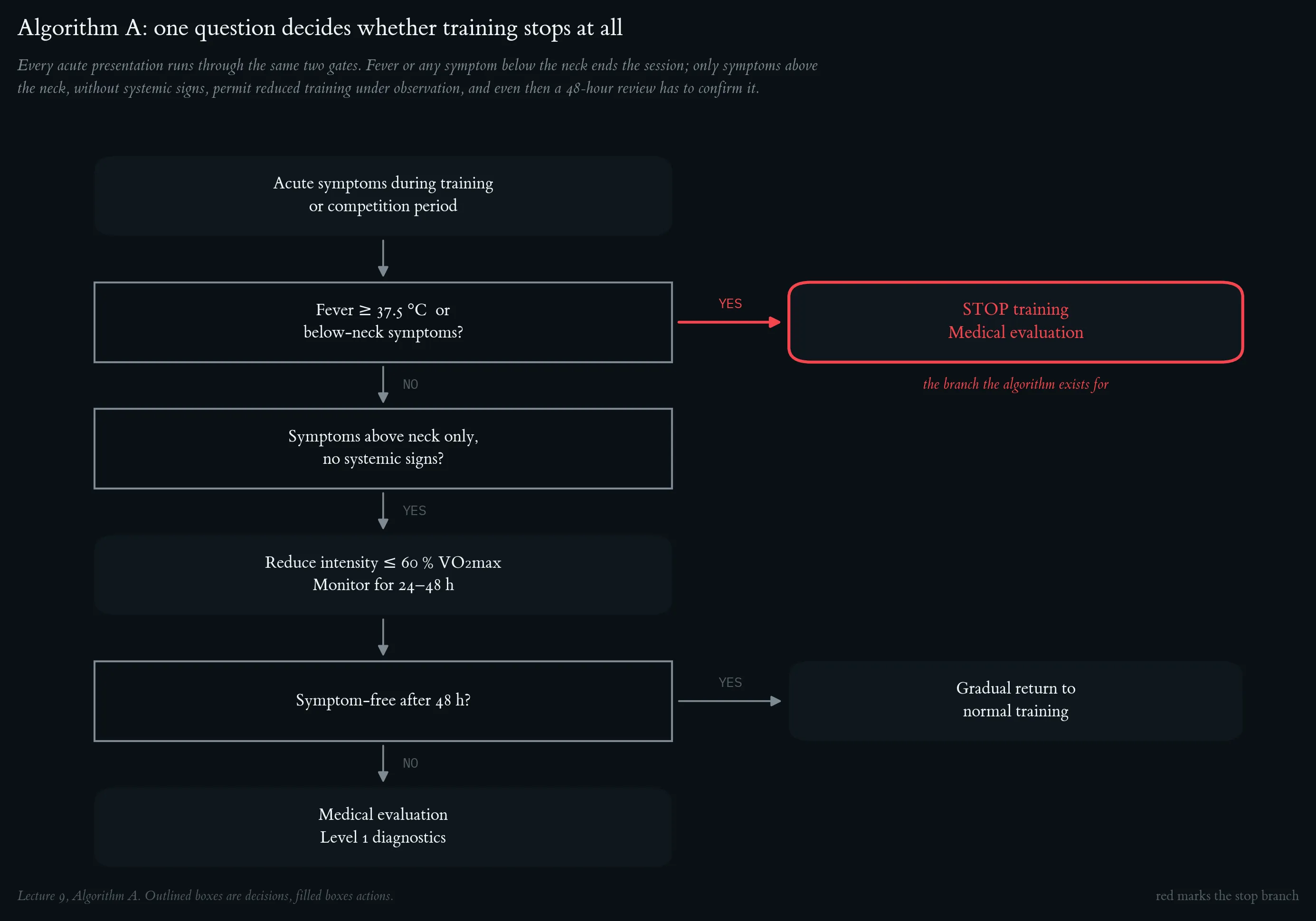
Every acute presentation runs through the same two gates. Fever or any symptom below the neck ends the session; only symptoms above the neck, without systemic signs, permit reduced training under observation, and even then a 48-hour review has to confirm it. Outlined boxes are decisions, filled boxes actions.
3.2 Algorithm B: Return-to-Sport Clearance After Confirmed Infection
Return-to-sport clearance integrates four elements:
- Minimum rest period: 10 days post-diagnosis including ≥ 3 consecutive symptom-free days
- Clinical examination: Vital signs, lymphatic, cardiopulmonary, and neuromuscular assessment
- Level 1 laboratory: Differential blood count, CRP, CK, troponin if myocardial involvement suspected
- Graded return protocol: 5-step graduated return (rest → light aerobic → moderate aerobic → sport-specific → full training → competition), each step minimum 24 h
3.3 Integration: Immunological Biomarkers in the Context of Trace Elements
The standardised laboratory evaluation in the post-exercise setting must account for the acute redistribution of trace elements. Key principles for interpretation:
- Blood sampling timing: Avoid collection within 2 h of exercise for selenium, copper, and free zinc; iron measurements should also account for acute haemolysis
- Hemoconcentration correction: Adjust serum values for exercise-induced plasma volume reduction (Alis et al. method) when comparing against reference ranges established at rest
- NLR/SII/SIRI interpretation: These cellular inflammation indices display a characteristic biphasic pattern post-exercise (decrease → increase above baseline over 60 min) that must not be misattributed to infection or overtraining without temporal context (Simon et al. 2026)
3.4 Practical Summary: Standardised Evaluation Checklist
The following checklist integrates the preceding sections into a field-applicable tool:
Monitoring toolbox with thresholds and actions for return-to-training.
| Domain | Assessment Tool | Threshold / Action |
|---|---|---|
| Subjective wellbeing | TQR scale (1–20) | TQR < 13 → reduce load |
| Upper airway symptoms | WURSS-11 | Score ≥ 7 per session → medical review |
| Training load | Session-RPE × duration | Acute:chronic ratio > 1.5 → caution |
| Resting heart rate | Morning measurement | ≥ +7 bpm above baseline → reduce/rest |
| Mood disturbance | POMS brief | Iceberg profile inversion → overreaching alert |
| Core temperature | Oral/tympanic | ≥ 37.5 °C → rest; ≥ 38.5 °C → medical evaluation |
| Laboratory Level 1 | CBC, CRP, CK | CRP > 5 mg/L + symptoms → medical evaluation |
| Trace elements | Se, Zn, Cu, Fe panel | Interpret relative to sampling timing post-exercise |
| Cardiopulmonary exam | Auscultation, ECG | Any new finding → cardiology referral pre-return |
Monitoring toolbox with thresholds and actions for return-to-training.
→ Interactive Dashboard - Differentiation, Assessment, Diagnostics — Exercise and Infection
One-Minute-Paper Topics
A One-Minute-Paper (OMP) is a short, focused prompt that students answer in ~60 seconds at the end of a session to consolidate learning, surface misconceptions, and provide formative feedback. When answering, be concise, specific, and use terminology from today’s session.
- What is a diagnostic algorithm, and why is it useful for return-to-play decisions?
- Describe one decision tool you would use to clear an athlete after a viral infection.
- Explain why an integrative (multi-domain) assessment outperforms single-marker approaches.
- Describe a clinical scenario where a standardised algorithm would override clinical intuition — and one where it would not.
- How would you document immunological stress in a structured medical record?
- How would you train coaches to use these standardised tools correctly?
- Name one ethical concern when monitoring athletes with continuous symptom tracking.
Key References
- Halle M et al. (2021) Exercise and sports after COVID-19. Transl Sports Med 4:310-318.
- Puta C, Haunhorst S, Gabriel HHW (2026) Sport und Immunsystem. In: Wonisch M et al. (eds) Kompendium der Sportmedizin. Springer.
- Schwellnus M et al. (2022) IOC consensus statement on acute respiratory illness in athletes. Br J Sports Med.
- Simon R et al. (2026) Acute effects of physical exercise on biomarkers of the trace elements selenium, zinc, copper, and iron. J Trace Elem Med Biol 94:127828.
References
- Alis R et al. (2015) Hemoconcentration induced by exercise: revisiting the Dill and Costill equation. Scand J Med Sci Sports 25(6):e630–e637.
- Barrett B, Locken K, Maberry R, Schwamman J, Brown R et al. (2002) The Wisconsin upper respiratory symptom survey (WURSS): a new research instrument for assessing the common cold. J Fam Pract 51:265.
- Barrett B, Brown R, Mundt M, Safdar N, Dye L et al. (2005) The Wisconsin upper respiratory symptom survey is responsive, reliable, and valid. J Clin Epidemiol 58:609-617.
- Halle M et al. (2021) Exercise and sports after COVID-19. Transl Sports Med 4:310-318.
- Nieman DC, Wentz LM (2019) The compelling link between physical activity and the body’s defense system. J Sport Health Sci 8(3):201-217.
- Puta C, Haunhorst S, Gabriel HHW (2026) Sport und Immunsystem. In: Wonisch M et al. (eds) Kompendium der Sportmedizin. Springer.
- Schwellnus M et al. (2022) IOC consensus statement on acute respiratory illness in athletes. Br J Sports Med.
- Simon R et al. (2026) Acute effects of physical exercise on biomarkers of the trace elements selenium, zinc, copper, and iron. J Trace Elem Med Biol 94:127828.